
Will Azerbaijan Join the War Against Iran?
Neoconservatives see Iran’s Azerbaijanis as a chance to promote sectarian strife.
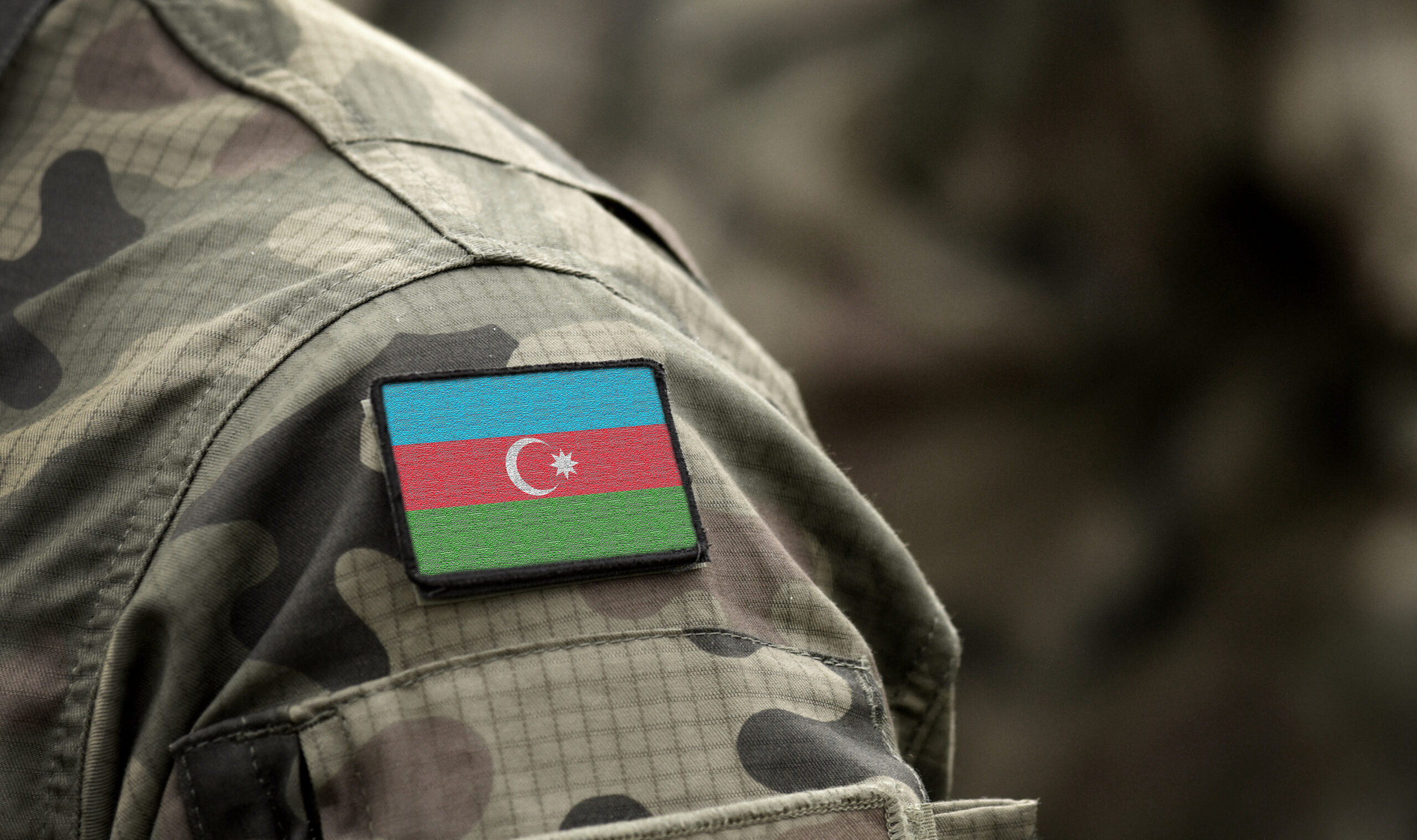
As Iran lashed out at neighboring countries to raise the costs of the U.S.-Israeli war against it, on Thursday Azerbaijan joined the list of apparent targets.
One unmanned aerial vehicle slammed into the terminal building of Nakhchivan Airport in the Azerbaijani exclave surrounded by Turkey, Armenia, and Iran.
Another crashed near a school in the village of Shakarabad. Four civilians were reportedly wounded. Baku confirmed that four UAVs from the armed forces of the Islamic Republic of Iran were directed toward the region—one neutralized by Azerbaijani forces, while the others reached their marks.
By any measure, it was a brazen and unprecedented act in relations between Iran and Azerbaijan, explainable only by the context of the ongoing U.S.-Israeli war on Iran. The airport sits roughly ten kilometers from the Iranian border. And the exclave, already isolated by the cancellation of bus services through Iran days earlier, suddenly found its last remaining link to the Azerbaijani mainland—air travel—frozen.
Azerbaijan’s President Ilham Aliyev called the strike “an act of terror.” Iran’s response was swift and categorical. The foreign ministry and general staff of the armed forces declared that Iranian forces had launched no drones toward Azerbaijan, emphasizing that Tehran respects the sovereignty of all nations, “especially the neighboring and Muslim ones.”
Iranian officials suggested that the cause of the incident was a false flag operation by Israel aimed at goading Azerbaijan into opening a northern front in a war with Iran. Azerbaijan is Israel’s ally, a key supplier of oil, a foothold for Israeli intelligence, and a buyer of Israeli weapons which it used in conflict with its arch-rival Armenia.
Baku, predictably, found these explanations insufficient. Aliyev convened an emergency meeting of the Security Council and demanded an immediate apology, an explanation, and criminal accountability for those responsible. “The people of Azerbaijan must be confident that any evil force will have to face our iron fist,” he declared.
But it was what Aliyev said next that caught attention. Slamming reports in the Iranian media that Azerbaijan provided its territory and airspace for Israeli attacks against Iran during the 12-Day War last year, he accused Tehran of trying “to change the sentiments of our compatriots” living in Iran. He also cast the Republic of Azerbaijan as “a place of hope for many Azerbaijanis living in Iran.”
He was referring to Iran’s Azerbaijani population, which some estimate to amount to 15–20 million of the total of more than 90 million Iranians. That’s substantially more than the population of Azerbaijan itself: around 10 million.
While Baku does not officially endorse Iran’s ethnic disintegration as a matter of policy, it has increasingly emphasized the protection of ethnic Azerbaijanis abroad, criticizing Tehran over language education and cultural rights. Such criticisms reliably increase during the moments of bilateral tensions.
Aliyev’s language finds enthusiastic support in Washington, where a small network of neoconservative hawks has spent years promoting Iran’s ethnic fragmentation. Most prominent among them is Brenda Shaffer, who is associated with the Atlantic Council and the Foundation for Defense of Democracies and has advocated for Azerbaijani interests while failing to disclose her ties to the state oil company SOCAR. The fantasy of Iran’s “Balkanization” along ethnic lines, including through the secession of “South Azerbaijan,” has become a recurring theme in neoconservative circles.
What these armchair strategists never address is what happens to everyone else—including Iran’s ancient Christian Armenian communities—as a result of the sectarian strife in Iran they are promoting.
Aliyev’s speech, whatever its domestic political utility, plays directly into this narrative. It positions Azerbaijan not merely as a victim of alleged Iranian aggression, but as the potential vanguard of a project to redraw borders and dismember a neighboring state.
For all the tough talk from Baku, however, Azerbaijan’s options are severely constrained. Four civilians are already wounded as a result of the drone attack—survivors only by luck. Escalation with Iran would likely lead to casualties.
The country’s energy infrastructure—the oil and gas platforms and pipelines that fund the state budget and underpin the entire economy—sits within easy reach of Iranian drones and missiles. The Gulf states are confronted with a similar dilemma—and, cognizant of their vulnerabilities, they chose not to escalate matters with Tehran.
Thus far, Azerbaijan’s response has been largely symbolic. The Iranian ambassador has been summoned to the foreign ministry in Baku and handed a formal protest note. The government has announced that forces are preparing “retaliatory measures.”
But preparing measures and executing them are two different things, and the gap between rhetoric and action is the space where diplomacy does its work. In practical terms, so far Baku has closed vehicle crossings to trucks, including transit traffic, disrupting cross-border trade, but not much more.
The truth is that neither Baku nor Tehran has a genuine interest in escalation. Iran is fighting for its survival on multiple fronts. The last thing its remaining military leadership needs is a distraction that could become a second active front.
Azerbaijan, for its part, has everything to lose. Aliyev knows that the “iron fist” that crushed Armenian forces in Karabakh would be of limited use against a country that can severely damage his economy without committing a single soldier to ground combat. He also knows that encouragement from the Washington think-tank hawks does not amount to American security guarantees.
This is why, despite the heated rhetoric and the genuine outrage over the drone strikes, the most likely outcome in the coming days is deescalation. Iran will continue to deny responsibility. Azerbaijan will continue to demand an apology. Some face-saving formula will be found—perhaps an offer of compensation for the wounded, perhaps a joint investigation. The border closures may persist for a time, causing economic pain on both sides, but tensions probably will not spiral into open warfare.
And yet.
The longer-term picture is far less reassuring. The drone strike on Nakhchivan did not occur in a vacuum. It came just days after the United States and Israel launched coordinated strikes on Tehran, killing Iran’s Supreme Leader Ayatollah Ali Khamenei and plunging the region into chaos.
What Washington has not explained is what comes next. The plan, insofar as there ever was one, appears to have ended with the assassination of Iran’s leader. There doesn’t seem to be a coherent strategy for managing the war’s aftermath or even the next phases of fighting, for containing the blowback, including American casualties, and for preventing the kind of escalation that could draw neighboring states—many of them, like Azerbaijan, America’s partners—into a conflict they never asked for.
The unfolding catastrophe makes the misbegotten 2003 Iraqi adventure look like an example of smart planning by comparison.
The post Will Azerbaijan Join the War Against Iran? appeared first on The American Conservative.