Vance Walks the Iran War Tightrope
The vice president faces a sticky wicket.
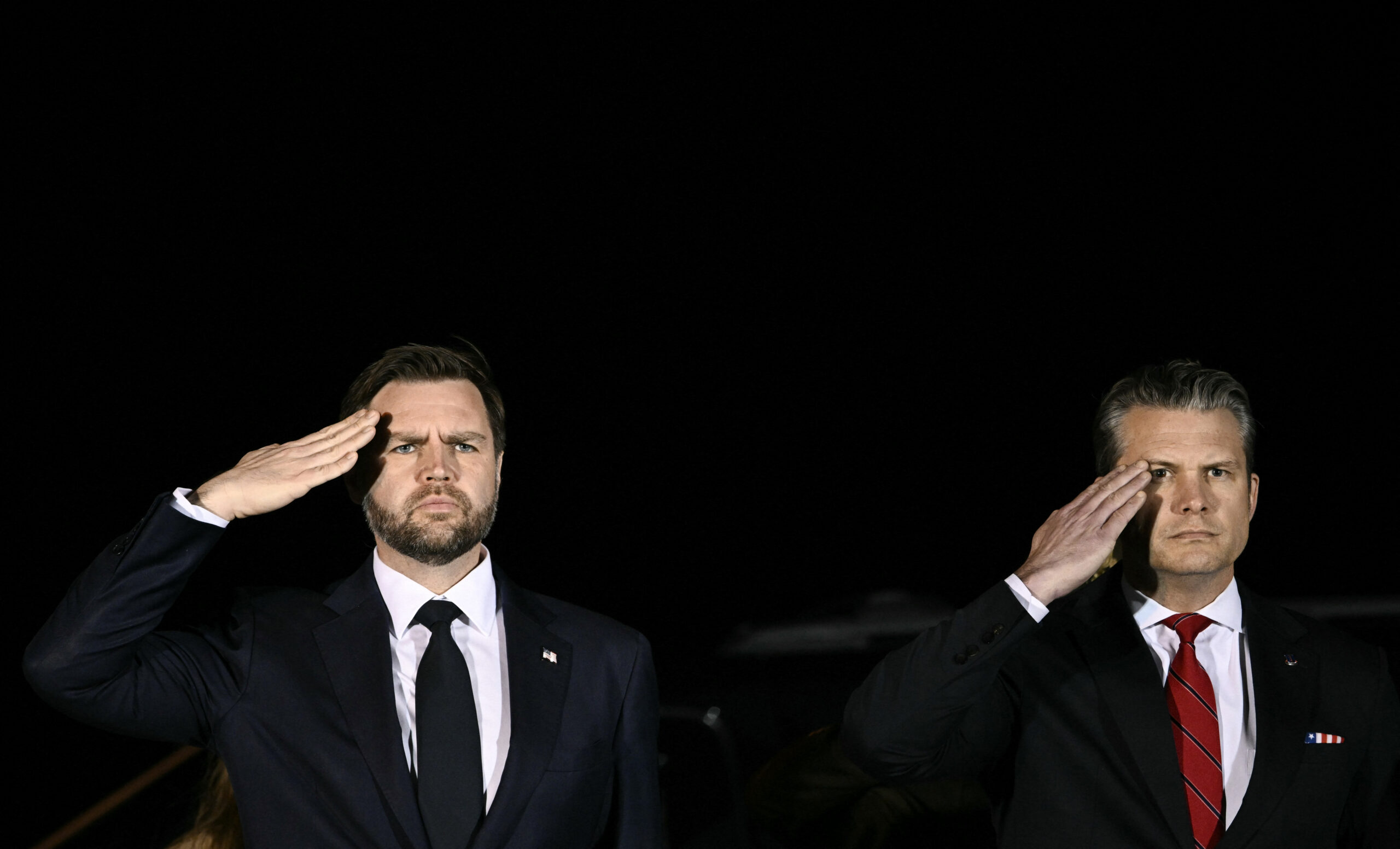
The long knives are out for Vice President J.D. Vance. His opponents are reading him a strange version of his Miranda rights, in which anything he says or doesn’t say about the Iran war can and will be used against him.
If Vance appears less than enthusiastic about the war, as President Donald Trump has seemingly acknowledged, his detractors crow that all is not well in MAGA world.
If the vice president defends the policy choices of the actual commander-in-chief, as nearly all modern vice presidents would do, he is somehow hypocritical or once again waffling on Trump.
If media outlets report that Vance was less gung-ho than others about yet another war in the Middle East, hawks pan him as an opportunistic leaker soon to be on the outs with Trump.
If Vance talks about something else entirely, he is just changing the subject to avoid angering various podcasters. Even the cover of his new book about his Catholic faith is receiving the kind of scrutiny that eluded Bush-era WMD claims.
Heads Secretary of State Marco Rubio wins, tails Vance loses.
The reality is that if war in Iran is still the main topic of national conversation as 2028 rolls around, Republicans are going to be in serious trouble no matter who is at the top of the ticket.
If the war is not as short as Trump and Vance have promised, it is unlikely that it will be widely seen as a success. But even if Operation Epic Fury is no epic failure, Republicans will be dragged down by a lack of domestic focus at a time when many are still upset by the high cost of living several years removed from inflation hitting a 41-year high under then-President Joe Biden.
Remember that even in a bygone era where it was possible for then-President George H.W. Bush to approach 90 percent job approval after quickly wrapping up the first Persian Gulf War, he was unable to win reelection as voters turned their attention to the 1990–91 recession.
About a third of the Republican coalition abandoned Bush for Ross Perot, an independent who had opposed the popular war. Bush received the lowest percentage of the popular vote of any incumbent president since William Howard Taft in 1912 and of any Republican presidential nominee since Alf Landon in 1936.
By the time the election rolled around, Bush was thought of less as a successful commander-in-chief and architect of the New World Order than as a rich old man mystified by a grocery store scanner.
The Iran War begins as a conflict that is only about as popular as Trump himself, with few backers beyond his base even after it has been going on for only a short time and has resulted in relatively few American casualties.
If the war is a distant memory by the summer of 2027 or so, the conversation will shift once again. If it is still ongoing, Republicans probably will not be better off with a more zealous supporter of the policy, no matter how eloquent.
For now, there is plenty of room between a Joe Kent–style resignation and a conversion into latter-day Cheneyism. And 2028 is a long way away.
Vance is walking a difficult tightrope, but so far is doing so skillfully, despite all the people jeering on the sidelines hoping he will take a nasty fall.
Conservatives who had hoped a second Trump administration would avoid wars of choice in the Middle East are understandably frustrated, though Trump’s mixture of Middle East adventure skepticism and “maximum pressure” on Iran was always bound to leave at least one faction of his backers disappointed. Some might distrust any personnel associated with this policy, and perhaps they will soon have other options.
As the philosopher-king George W. Bush once memorably observed, “Fool me once, shame on… shame on you. Fool me—you can’t get fooled again.”
Nevertheless, it is worth noting that some of the Republicans most eager to bury Vance in Iran are among the most supportive of having U.S. troops there.
It might at least be valuable to contemplate before getting fooled again.
The post Vance Walks the Iran War Tightrope appeared first on The American Conservative.