
Appeasing Allies
When perpetuating an alliance becomes its own end, danger is not far off.
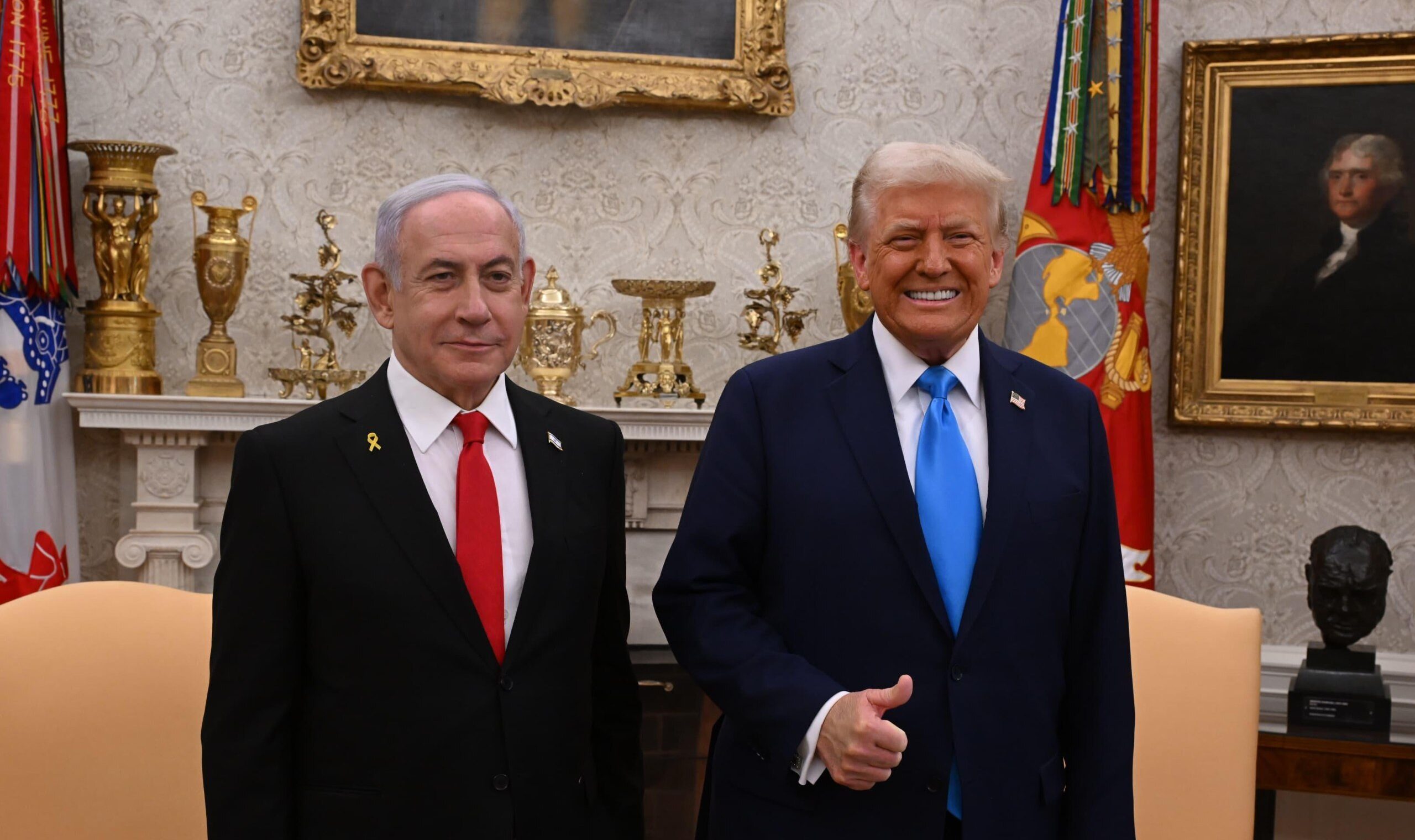
The concept of “appeasement” is something invoked by foes of diplomacy who are in love with making bad Second World War analogies and applying black-and-white absolutism to the nuances of geopolitics. But there is one place where the term might actually have some constructive purpose: not for giving in to rivals by practicing diplomacy, but for giving in to the demands of allies uncritically. Such appeasement does in fact exist and is indeed dangerous, but not in the way that most who deploy the term mean.
Only defense contractors and ideologues see any reason for a nation far outside the greater Middle East region to support war with Iran (or any such perpetual and costly military operations in general). The global balance of power is not at stake, and no indigenous power has the capability to dominate the entire region. But defense of the alliance is constantly cited in U.S. foreign policy circles as the primary reason to engage with Iran in partnership with Israel. While there is some debate over who is in the driver’s seat of recent operations, with President Donald Trump claiming ownership on the American end and Secretary of State Marco Rubio implying Israeli initiative on the other, the key point is that all parties involved cite the necessity of upholding the partnership between the two states as sacrosanct.
These alliance networks were built during the Cold War to combat the never-realized possibility of Soviet domination over the region. They became obsolete with the fall of the Union. Much like NATO, having lost their original impetus, they are now being retooled around increasingly abstract ends in order to justify their perpetuation in the game of primacy. And if recent rhetoric from within Israel is to be believed, these archaic alliance networks could well be on a collision course, as NATO member Turkey is increasingly viewed as the next rival for Israel in the region.
The viability of alliance networks comes from circumstance and geography. There have been many alliances that arguably have deterred war, just as there have been many, like the catastrophically rigid systems in place on the eve of the First World War, that have plunged their participants into disaster. But a general trend that can be gleaned from history is that the further afield from core interests an alliance network is, the more forced, ideological, and profit-driven they have to become in order to retain their relevance. This creates a feedback loop that turns a network of convenience into an end of self-perpetuation in itself and can lead policymakers to do things not for the publicly debated national interest, but for the alliance itself. The dual-loyalty aspect is not so much explicitly for a foreign nation, but for the international relationship network itself, above the individual countries that are the constituent parts of the alliance.
The U.S.-Israeli relationship is by no means alone in this kind of artificial construction, but it is foremost in looking at this dynamic today—a relationship that must be “appeased” for its own sake rather than that of its constituent members. Now NATO itself, following the same path, will see many constituent alliance network members advocate for a reluctant public to deploy forces for some faraway conflict on behalf of a state which is not even part of their traditional defense network. With the breakdown of spatial relationships to serve the homunculus of global elite patronage, one can only imagine a backlash is growing. But the foreign policy establishments in many countries continue their work of appeasing the alliance.
There is another path. The distance and geography of the United States and its first century of not only survival but prosperity show that such a country does not need permanent alliance networks, nor must constantly appease them if it does have such arrangements. If anything, the post–Cold War era in particular has shown that constructing these networks has only increased the likelihood of being dragged into conflict and experiencing backlash at home.
The United States’ founding was an effective opting-out of subordinating one’s regional interest for global commitment in the context of the British Empire. And one of its first diplomatic crises after achieving independence, the Quasi-War, occurred to extract itself from French designs of using the young and still unstable country as a pawn in its own game of global revisionism. Francophilia then was even stronger in America than the present foreign policy establishment’s love for Israel is today. But if the Washington and Adams administrations could break dependency on a supposedly permanent alliance, then it is well within the realm of possibility that a future American government could end the appeasement arrangement with Israel or any other liability state for being against the national interest.
The post Appeasing Allies appeared first on The American Conservative.