Right-Wing Divisions Could Deliver Downing Street to Socialist Burnham
A brutal knife attack in Belfast doesn’t seem to have boosted Reform UK.
“I’ve got a message for Elon Musk,” said Ed Miliband, the UK Energy Secretary, at the last Labour Party conference. “Get the hell out of our politics and our country.”
It is hardly surprising that the left-wing Net Zero Secretary should be taking issue with the world’s richest man. However, the right-wing Reform UK leader, Nigel Farage, is upset with Musk too. He has called for the X boss to remove deepfake videos showing him physically attacking the governor of the Bank of England, Andrew Bailey, seemingly in the BBC Question Time studio.
And Nigel Farage has more important reasons to want Musk to butt out of British politics. His support for Reform’s further-right, breakaway party, Restore Britain— led by the former Reform MP Rupert Lowe, who wants “remigration” of even legal immigrants—could do serious damage to Reform’s chances in the Makerfield by-election this week.
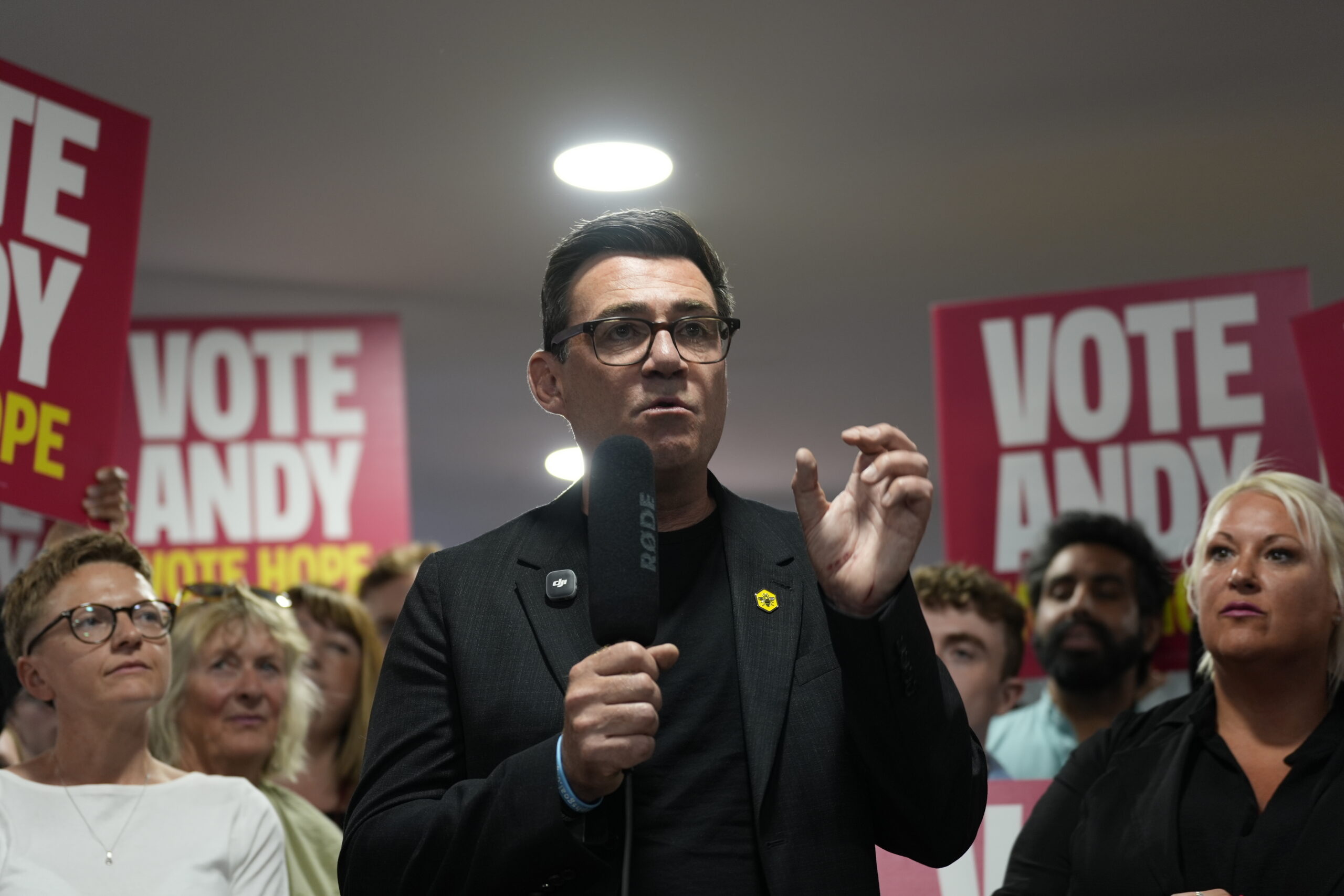
The Labour leadership challenger, Andy Burnham, had been neck and neck with Reform’s candidate, Robert Kenyon. But recent polls show Burnham establishing a 10-point lead over Kenyon, with Restore Britain now polling only 8 percent in Makerfield. A UK-wide poll by More in Common last week suggests that 19 percent of Reform voters are now supporting the breakaway Restore party.
A brutal knife attack by a Sudanese asylum seeker, Hadi Alodid, in Belfast last week would normally be a gift to Reform UK. Alodid had entered the UK across the unchecked border with the Republic. Immigration is probably the key issue in Makerfield, second perhaps only to the cost of living. But as Lowe points out, the attacker, Alodid, was granted refugee status by the former Tory Home Secretary in 2023, Suella Braverman. She is now Reform’s equalities spokeswoman.
However, it is not just the Rupert Lowe factor that is causing electoral distress for Farage. Reform’s champion, local plumber Robert Kenyon, is just not a convincing politician. In the two televised debates so far, Kenyon has appeared wooden, inarticulate, and ill-informed about policy, and he has a record of sexist and offensive tweets.
Reform voters, male ones at any rate, might be prepared to forgive his sexist remarks were Kenyon more effective at expressing their concerns about the cost of living, immigration, benefits culture, net zero, and crime—but he just isn’t. He is an agreeable, local bloke. Many voters might be happy to have a drink with him in the pub, and even share his jokes, but alienated Makerfield voters also want someone who can hold their own in debates with the left and has a bit of populist charisma, something the Reform leader, Nigel Farage, has in spades.
Andy Burnham, meanwhile, has been chipping away at the Reform vote via a common left-wing tactic: triangulation. He has said that net migration needs to fall further, even though it has halved since 2024, and has hinted at detention centers for illegal migrants. He has stopped repeating the mantra “trans women are women” and says he supports women’s single-sex spaces. He says he does not want to return to the European Union any time soon, despite having recently expressed his longing to do so.
On the economy, however, he is still playing the old socialist themes from Labour’s back catalogue: attacking Margaret Thatcher’s privatization program and “Tory austerity.” He wants wealth taxes, land taxes, and increased income taxes “on the rich.” He is hostile to private landlords and wants to control rents. His flagship policy in Greater Manchester has been making the city carbon neutral by 2038, and his campaign is backed by the Net Zero Secretary, Ed Miliband.
The Greater Manchester Mayor also wants public ownership or at least public control over utilities and the immediate nationalization of Thames Water. Burnham has said that he would not be “in hock to the bond markets,” yet he wants to borrow another £40 billion or so to build social housing and cut fares on public transport.
So the tax-and-spend agenda is still very much intact. The problem here for Reform is that many of their supporters, or potential supporters, want wealth taxes too, at least on those with a net worth of more than £10 million. Voters struggling with the cost of living also like the idea of price controls on food and transport. Renationalization of utilities is also a popular policy in the UK, according to opinion polls. Rents have risen hugely in recent years, as have house prices, and for many voters under 40 the lack of affordable housing is the number one issue.
Many Reform voters see no contradiction in supporting government intervention in the market at the same time as opposing left-wing policies on the environment, immigration and gender. It is a problem Nigel Farage’s party has yet to resolve.
Reform’s economic policies are not exactly free market. Farage has called for the nationalization of British Steel and supports protectionism in trade. Reform supports more public spending in areas like the NHS and housing and does not seem to want big reductions in benefits to families.
Billionaires are not exactly praised in British political culture. Farage is being investigated by the Parliamentary Standards Commissioner over a £5 million donation from a Thailand-based cryptocurrency trader, Christopher Harborne. It is not a good look. However, this is where it gets interesting.
Scratch the surface, and Andy Burnham turns out to be one very big supporter of very wealthy people. Indeed, his revival of Manchester city center, now glistening with tower blocks, was largely achieved through giving very large public loans to property developers to build thousands of expensive flats that very few Manchester people can afford.
As mayor, Burnham chaired the Greater Manchester Housing Investment Loans Fund. It lent hundreds of millions to Renaker, led by billionaire Daren Whitaker. These loans helped fund luxury high-rise skyscrapers in central Manchester, many of which were marketed to Chinese buy-to-let landlords. Of the thousands of new homes built in the city, fewer than 5 percent were affordable.
No one suggests that Burnham did anything improper; indeed, his developments have had a transformative impact on the Manchester economy, which has been growing faster than any other city in England. He’s the kind of politician Donald Trump would love to do business with. But it does rather clash with his socialist schtick.
This week, if he wins in Makerfield, Andy Burnham will immediately launch a campaign to replace Keir Starmer as Prime Minister. Intriguingly, Starmer says he is “not going anywhere” and is determined to fight to stay in Number 10. Perhaps Starmer realizes that some of the gloss is beginning to fade from the King of the North.
The post Right-Wing Divisions Could Deliver Downing Street to Socialist Burnham appeared first on The American Conservative.