
Russia’s Warnings Signal Danger of Widening War
In the Baltics and in Kiev, the risks of a major escalation are rising.
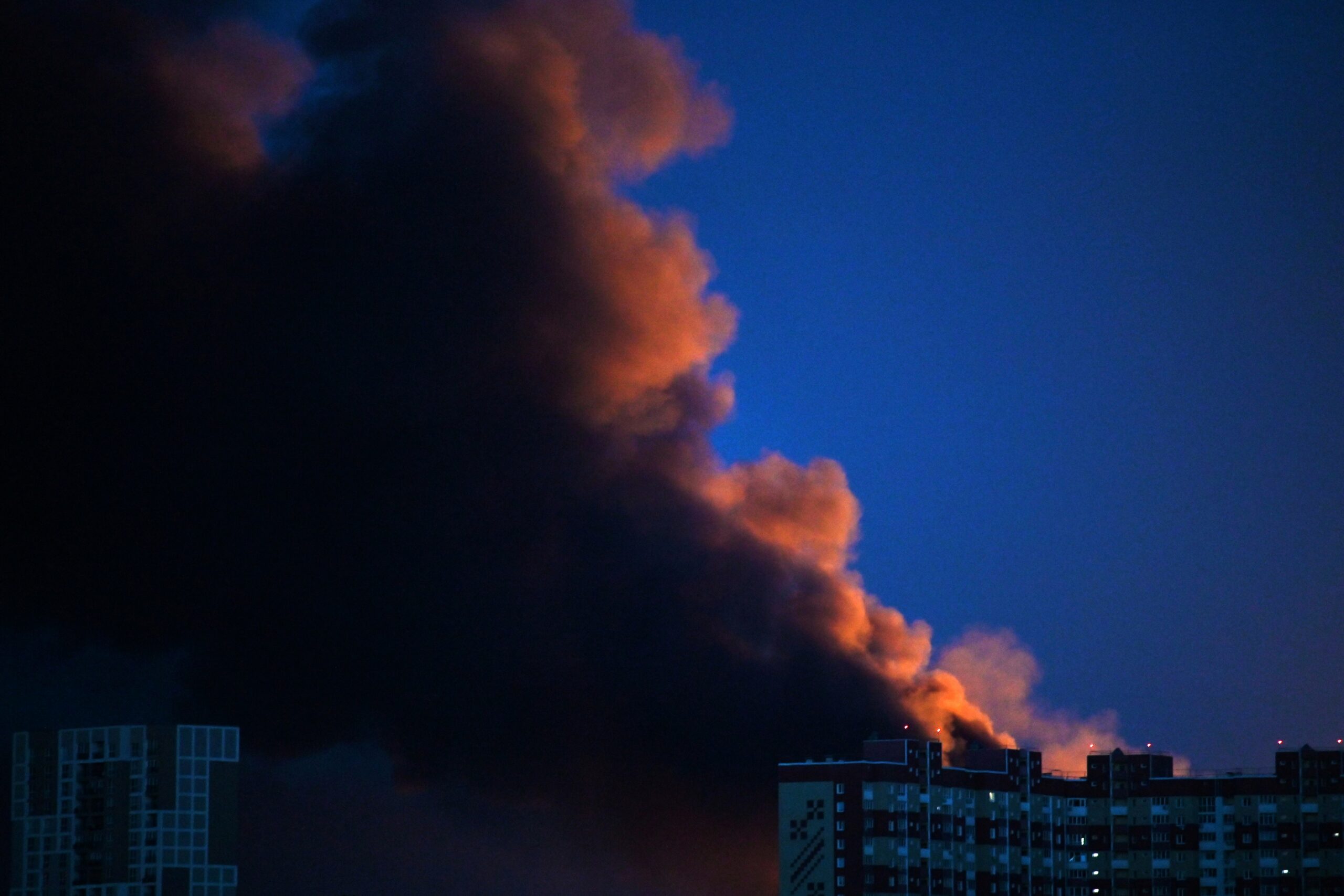
The United States and Russia have agreed on little in the war in Ukraine. The one thing they have agreed on is the existential necessity of avoiding a direct war between NATO and Russia, which could become a third world war or even a nuclear war.
At the beginning of November 2021, three and a half months before the war began, then-CIA Director William Burns spoke to Russia’s President Vladimir Putin, and the two laid out what the boundaries of the proxy war would be. Newsweek reported the “rules of the road” to be these: “The United States would not fight directly nor seek regime change,” and “Russia would limit its assault to Ukraine.” The U.S. wouldn’t attack Russia, and Russia would not attack NATO.
After Russia’s invasion began, the U.S. adopted a reckless policy of escalatory participation that aimed to fall just shy of the sort of direct fighting that would draw Russia into a war with NATO. And Russia exercised restraint in its responses to those escalations in order to avoid drawing NATO into a war with Russia.
The possibility of that caution failing is now at perhaps the highest level it has been at any time of the war. One flashpoint for a wider war is the Baltic states, while another is actually inside Ukraine, in the capital Kiev, which hosts American and European diplomats and military officers.
Last month, a Romanian F-16 fighter jet based in Lithuania shot down a Ukrainian drone in Estonian airspace after it had flown through Latvian airspace. It was not the first Ukrainian drone to have recently flown through the airspace of the Baltic countries. The Baltic nations, Latvia, Lithuania, and Estonia, are NATO members.
Kiev says Russia is “redirect[ing] Ukrainian drones into the Baltics with the use of its electronic warfare.” Russia says that the Baltic countries are permitting the Ukrainian armed forces to use “air corridors” that reduce flight times to targets deep inside Russia and increase their effectiveness.
Latvia’s President, Edgars Rinkēvičs, says the Russian accusation is a lie: “Russia is lying about Latvia allowing any country to use Latvian airspace and territory to launch attacks against Russia.” The Ukrainian foreign ministry says that none of the Baltic countries have granted Ukraine use of their airspace and that Kiev “has never requested such a use.”
But Russia is not just accusing the Baltic countries of permitting the Ukrainian armed forces to use their airspace. Moscow says it has intelligence indicating that the Baltic states plan to permit the Ukrainian armed forces to launch drones from their territory and that “Ukrainian Armed Forces Unmanned Systems Force personnel have already been deployed to Latvia.”
Suggesting the risk of drawing NATO into the war in Ukraine, Putin warned that “Russia would treat all Ukrainian drone launch sites as legitimate targets, even if they operate from the Baltic states.” In a press release, the Russian Foreign Intelligence Service (SVR) reminded the leaders of the Baltic countries that “modern intelligence tools make it possible to reliably determine the coordinates of a UAV’s launch point” and that not only are “the coordinates of decision-making centers on Latvian territory… well known” but that “NATO membership will not protect terrorist accomplices from just retribution.”
Russian warnings of a new category of strikes on Kiev also highlight the real risk of a wider war. Russia has recently suffered increased long-range Ukrainian strikes into its territory. Such strikes are believed to be possible only with American and European assistance in intelligence and targeting. But the strike that proved to be the last straw for Russia was a Ukrainian drone strike on a college in Starobilsk in the Russian-controlled Luhansk region of the Donbas that killed 21 students and injured more than 40 others.
Following the dormitory strike, Russia announced that it would begin “systematic strikes…. on decision-making centers and command posts.” Moscow clarified that “decision-making centers” do not include Ukraine’s parliament, the Verkhovnaya Rada, or Ukrainian Prime Minister Volodymyr Zelensky’s office. Targets could include underground fortified military command and control centers and bunkers used by the Ukrainian military leadership.
Because American and European officers assist the Ukrainian armed forces with targeting Russia with missiles and drones from those underground headquarters, the risk of causing a NATO–Ukraine war again arises. Highlighting that risk, Moscow advised Western diplomats and representatives to leave Kiev as soon as possible. In a move that suggests the seriousness of the situation, Russian Foreign Minister Sergey Lavrov separately drew U.S. Secretary of State Marco Rubio’s attention to the advice to evacuate diplomatic personnel from Kiev.
Until now, despite their own headquarters having been targeted, Russia has avoided such strikes, presumably because of the risk posed by the presence of NATO officers. So far, it seems Russia has not hit the bunkers but has intensified strikes on the Ukrainian capital.
On May 23, Russia launched a massive attack on Kiev and the surrounding area, which included hypersonic missiles and the highly advanced Oreshnik missile. The Oreshnik missile was not fired at Kiev, but at the nearby city Bila Tserkva. On Tuesday, Kiev was targeted again with a massive strike that, according to early reports, featured several hypersonic missiles.
Kiev has been challenging to strike because its air defense systems make it one of the most protected cities in Europe. But the massive and effective strikes have exposed the increasing vulnerability of Kiev’s air defenses due to Russian degradation of the existing defenses and the difficulty of replenishing munitions when U.S. interceptors are being diverted for the war in Iran, including the badly needed Patriot missiles.
Like potential strikes on NATO territory in the Baltics, strikes on facilities in Kiev that house NATO officers risk the very danger the U.S. and Russia have tried to avoid: dragging the U.S. and Europe into a direct NATO–Russia war. The U.S. would be wise to push Ukraine and the Baltic countries not to permit drone and missile launches from NATO territory and to, as urgently as possible, recommit to serious peace talks.
The post Russia’s Warnings Signal Danger of Widening War appeared first on The American Conservative.