
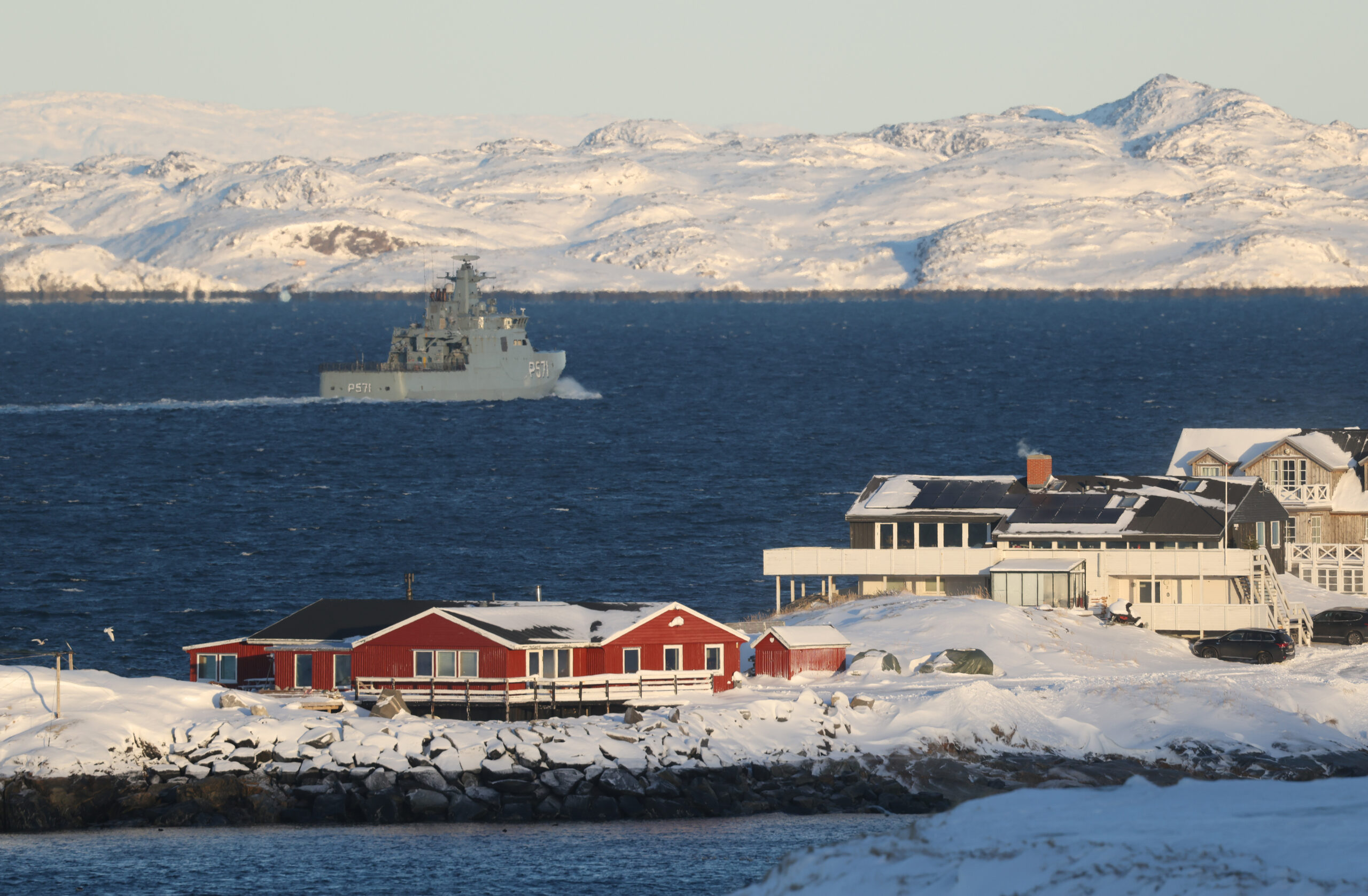
Last year, I founded the Greenland Caucus (GreenlandCaucus.org). Almost immediately we had members from the House and Senate interested in advancing a closer relationship with Greenland. With President Donald Trump’s newly announced “framework of a future deal” on Arctic cooperation, the question isn’t whether we should strengthen our defense integration with Greenland, but rather how this can be accomplished.
President Trump’s provocative rhetoric has had its intended effect of focusing both the American people and our international partners on the importance of a U.S.–Greenland agreement. Partisan critics portray America’s interest in Greenland as some passing fancy, or vanity project, but that is simply not true. The United States’ interest in Greenland predates President Trump and will outlast his presidency because it is an important and enduring strategic priority.
After successfully acquiring Alaska from Russia, Secretary of State William Seward (1861–1869) sought to acquire Greenland from Denmark. Between 1886 and 1909 explorers like Robert Peary explored and charted Greenland, seeking to make it part of the United States. In the early 1900s interest in Greenland was concurrent with acquiring the Danish West Indies, now known as the Virgin Islands, which we acquired in 1917. In 1946, President Harry Truman offered to acquire Greenland.
Despite Denmark’s refusal to sell, the U.S. built bases there throughout the Second World War and the Cold War. Securing shipping lanes was essential to winning the Second World War and to preserving security ever since. Established in 1951, the Pituffik Space Base recognizes Greenland’s geographic importance for ballistic missile early detection, satellite communication, and Arctic surveillance. Political hacks who attack President Trump for his interest in Greenland ignore the century-plus bipartisan consensus that Greenland is indispensable to North American defense and U.S. strategic deterrence.
The 1951 Defense of Greenland Agreement already grants the United States broad, indefinite military rights without a fixed expiration date, often described as granting “sweeping” or “total” access in perpetuity for defense needs. As we begin building the missile defense capability long envisioned, first as “Star Wars” and now as the Golden Dome, we now need an elaborate array of installations—and we need a stronger relationship with Greenland as well. Recognizing the strategic significance, President Trump has pressed for something more comprehensive.
Securing these installations will be vital to protecting their operational integrity and the integrity of the whole system. President Trump’s National Security Strategy communicates a coherent grand strategy that restores America’s proper focus on America’s national security, beginning in our own hemisphere.
To understand why this matters, we must acknowledge that the post–Cold War NATO model has broken down. For decades, Europe relied on the United States as its de facto defense force, expanding the European Union under the protection of America’s military while chronically underinvesting in its own security. Yet when America seeks to advance its own security—especially in the Arctic—European leaders suddenly object, even as Chinese and Russian economic influence becomes embedded in Europe’s political and commercial institutions. This is the status quo critics are trying to preserve, but it is precisely what the Trump Administration is right to challenge. The United States cannot defend North America with a security model designed to prioritize Europe. Reforming that imbalance begins with a new Arctic architecture anchored in Greenland.
We must shift our security model, because Russia and China are exploiting the Europeans and recognize the resource wealth, shipping lanes, and geographic importance of the Arctic in general and Greenland in particular. Finally, although Nordic countries secure Europe’s Arctic influence, the European Union is collectively leveraging Denmark’s claim to Greenland to remain in the great power discussion. Peary was right when he recognized Greenland was essentially subject to an extension of the Monroe Doctrine. Greenland is part of North America, not Europe.
In fact, Greenlanders have declined to participate in European structures. In 1985, Greenland formally exited the European Community—the first territory to ever do so. Consequently, Greenland is not part of the European Union. In 2009, Denmark recognized Greenland’s right to self-determination. With a single vote, Greenland can vote to change its relationship with Denmark. Obviously, the people of Greenland would then immediately face a self-sufficiency dilemma, including the ability to defend Greenland.
One possibility getting little attention already works elsewhere. With a second vote, the people of Greenland could enter a new Compact of Free Association (COFA) with the United States of America. COFA countries have a unique relationship with the U.S. that includes U.S. responsibility for their defense. The U.S. maintains full international defense authority and the right to operate military forces in their territories. In exchange, the U.S. provides guaranteed financial assistance and grants citizens of these nations the right to live and work in the United States without visas or work permits.
The people of Greenland are rightly concerned about big changes to their culture and way of life. They’ve developed an identity not only Inuit and specific to Greenland but also part of Denmark. Nevertheless, a shared future with the United States offers security, autonomy, greater access to American markets, and American capital. The U.S. presence in Greenland would certainly grow as we develop the land and resources, while preserving commercial and cultural access for the people of Greenland. With one vote, the people of Greenland could separate themselves from Denmark. With a second, they could unite themselves with the United States of America. Having committed to future collaboration, perhaps we can all agree?
As part of this shift, Congress can—and should—use its oversight authorities to organize fact-finding missions and delegation travel to Greenland. These visits are a practical first step toward building shared trust, establishing common interests, and demonstrating America’s seriousness about a long-term partnership.
I am anxious to break bread with friends in Greenland and hopeful for a closer future together.
The post The Arctic Frontier America Can’t Ignore appeared first on The American Conservative.