The UK’s New Budget Crowns a Generation of British Failure
Regulatory strangulation and an out-of-control welfare state bring high taxes and low growth.
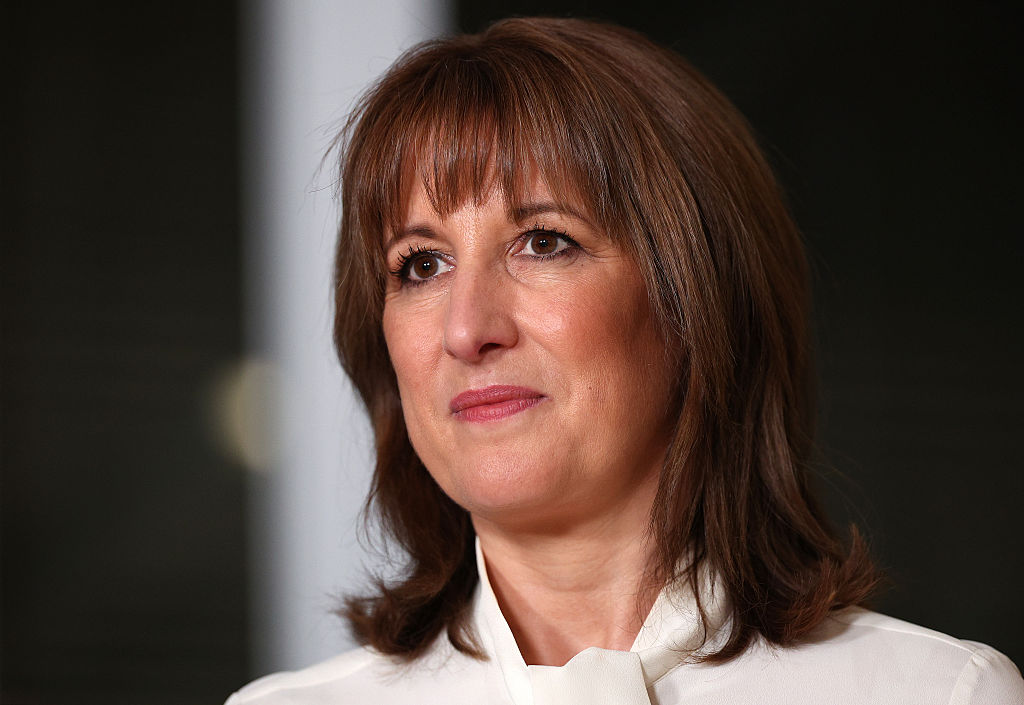
It was the 1970s Labour Chancellor Denis Healey who coined the phrase, “When you’re in a hole, stop digging.” It’s advice that Rachel Reeves, the current chancellor in Britain’s Labour government, has clearly chosen not to heed. Her second budget, delivered November 26, only added to Britain’s economic turmoil.
It is hard to remember a budget statement—where the UK’s chancellor of the exchequer informs Parliament of his or her taxing and spending plans—that was greeted with such trepidation. Even Reeves herself seemed to be dreading giving the speech, delaying it until nearly the end of November, the latest a budget has been held in at least the past 10 years. The news, in the end, was universally bad.
Reeves, despite promising only last year not to raise taxes on “working people,” unveiled £26 ($34) billion of tax rises on top of the £40 ($53) billion she announced last year in her first budget. Taxes were already at their highest levels since the Second World War. Now they have reached an all-time record.
On budget day, the Office for Budget Responsibility—an independent fiscal watchdog whose projections are relied on to make the numbers add up—warned of slower growth and higher inflation than expected in years to come. Government borrowing, already at unsustainable levels, will continue to rise under Reeves’s plans. The UK’s debt not only costs more to service than any other G7 country’s; the interest payments alone will also continue to dwarf public spending on vital outlays like education and defense.
So what has led the British economy into such a parlous state? It was not Brexit, despite what Reeves herself has tried to argue. Leaving the EU did cause some short-term disruptions, but other advanced EU countries are facing similar economic struggles right now. France’s fiscal crisis is both more acute and more politically intractable, with five prime ministers resigning after failing to pass a budget that might repair the public finances. Germany is deindustrializing at a rapid pace, with the economy as a whole barely growing at all since 2019. Despite Britain’s deep problems, growth forecasts for the next few years place it ahead of its G7 rivals (vying with Canada for second place, behind the U.S.). Blaming Brexit—a decision backed by the voters, but disdained by the political class—only lets the elites off the hook for their chronic mismanagement of the economy and the state.
The two key factors that have led to Reeves’s painful tax hikes are out-of-control welfare spending, mainly in the form of incapacity benefits to physically healthy people, and stagnant economic growth.
On welfare, the Labour government has tried and failed to pass even modest reforms that would bring spending under control. A staggering one in 10 of the working-age population now claims some sort of disability benefit—either the health element of Universal Credit or a Personal Independence Payment (PIP). Bleaker still, claims are rising fastest among the young, surging by 69 percent among 25- to 34-year-olds in the past five years. The fastest rise has also been for claims related to mental-health conditions, such as anxiety and depression.
Although the system is plainly unsustainable—not to mention immoral in encouraging people not to work—a major backbench rebellion of Labour MPs in the summer thwarted reforms that would have saved just £5 billion by tightening up the eligibility criteria. In this budget, the chancellor rewarded the rebels further by increasing the benefits able to be claimed by families with more than two children. A chancellor who once promised to get control of the runaway welfare bill has, in the end, only added to it.
Even more significant is the effective disappearance of economic growth. Back in 2004, the UK’s real GDP per capita was approximately $47,000, compared with the U.S.’s $58,000, a gap of just $11,000. By 2024, that gap had more than doubled to around $23,000, with the U.S. hitting $75,500, while the UK lagged behind at $52,500.
The reasons are not difficult to fathom. British policymakers have effectively made it either too costly or difficult to build or make anything. Net Zero and the transition to green energy (mostly wind in the UK context) have burdened the UK with the highest commercial electricity prices in the developed world. Every last coal power plant has been shut down, while gas plants have been allowed to fall into disrepair and some are not replaced. Domestic oil and gas production in the North Sea (where supplies are plentiful) has been taxed to destruction. Fracking is outright banned. As a recent research paper by Kallum Pickering and Charles Hall of the investment bank Peel Hunt lays out, Britain’s electricity supply has fallen by a whopping 21 percent in the past two decades, and the price has shot up accordingly. This decline in supply has happened even despite the green transition actually creating more demand for electricity—to power electric cars and electric heat pumps, for instance.
All this has taken a heavy toll on the car, steel, and chemical industries in particular, which rely on plentiful supplies of fossil fuels and cheap, abundant energy. Reeves, however, is blind to the deleterious effects of green dogma, having recently declared Net Zero to be the “industrial opportunity of the 21st century.”
In truth, Britain’s biggest growth industry seems to be bureaucracy, making construction far more cumbersome, expensive and time-consuming in the UK than it is in comparable countries. Housebuilding, which is continually blocked by so-called Green Belt regulations, recently fell at its sharpest rate since the Covid lockdown. The UK government was recently warned that a new nuclear power plant had been forced to spend £700 ($935) million on an elaborate scheme—dubbed the “fish disco”—to meet absurd conservation regulations by preventing a handful of salmon swimming into the reactors. HS2, a high-speed rail line linking London with the north that has become notorious for its ballooning costs, was forced to waste £100 ($134) million on a now notorious “bat tunnel”—a state-of-the-art structure designed to prevent rare bat species from flying onto the railway lines. Most egregious of all, plans for the Lower Thames Crossing—which, if it’s ever actually built, will connect Kent and Essex—cost a whopping £267 ($357) million for the planning permission alone. That’s twice as much as it cost Norway actually to build the Lærdal Tunnel, the longest road tunnel in the world.
Britain’s economic problems, then, are almost entirely self-inflicted. The good news is that the solutions are obvious and at hand: Growth could easily be unleashed by a reversal of Net Zero and the unblocking of cumbersome regulations; out-of-control spending could be reined in by having stricter and saner rules on who can qualify for welfare. The bad news is that the UK is hobbled by a political class that is too ideologically wedded to disastrous ideas like Net Zero, too cautious to remove regulations, and too cowardly to confront any vested interests or political factions that might stand in the way of change. Unfortunately, Rachel Reeves—or “Rachel From Accounts,” as she is often derided in the press—embodies this low-horizons mindset all too perfectly.
The post The UK’s New Budget Crowns a Generation of British Failure appeared first on The American Conservative.